

What Is A Still Bank?
You may already own one and not know that it has a name.
Perhaps there is an old cast-iron building on a shelf in your home, a ceramic pig that belonged to a grandparent, a small metal safe tucked away in a box, or an unusual bank you discovered at an antique shop or flea market. If it was designed to hold coins but does not perform an action when a coin is deposited, collectors generally call it a still bank.
The name distinguishes these banks from mechanical banks, which use a lever, button, spring or other mechanism to create an action when a coin is deposited. With a still bank, the coin simply goes into the bank. That simple difference opens the door to an extraordinary variety of designs, materials and history. Collectors have traditionally classified toy banks broadly as either still or mechanical banks regardless of the material from which they were made.


There Is No One Kind of Still Bank
One of the pleasures of discovering still banks is realizing just how many different forms they can take.
Some look exactly as you might expect a bank to look. Others may not look like banks at all until you discover the coin slot.
Collectors encounter still banks in many forms, including:
Building and architectural banks — houses, banks, churches, castles, public buildings and famous landmarks.
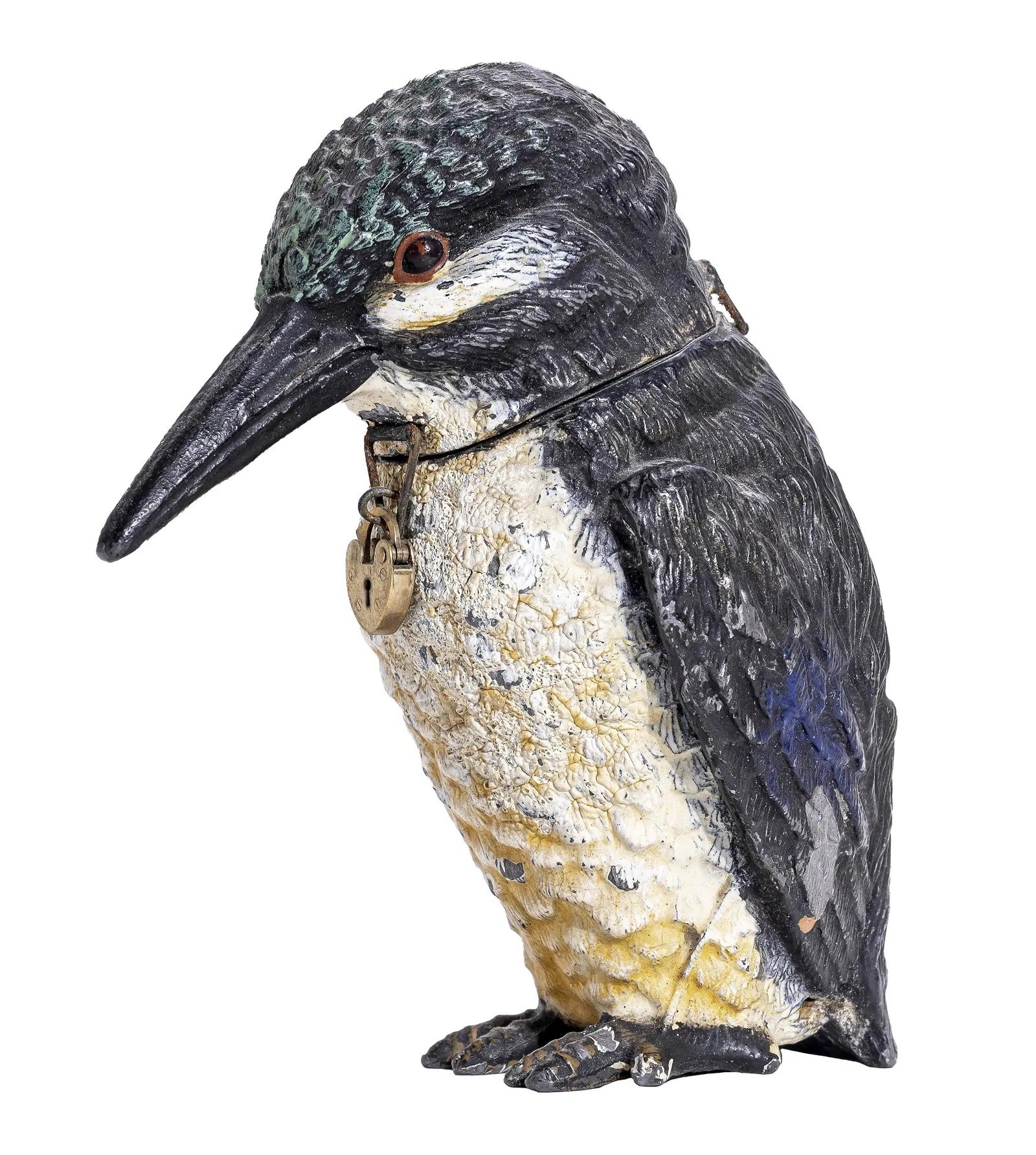
Figural banks — people, children, animals, birds and other recognizable figures.
Safe banks — miniature versions of safes and vaults, sometimes with surprisingly detailed doors and hardware.
Advertising and promotional banks — distributed by banks, businesses and other organizations to encourage saving while promoting a company or product.
Patriotic, historical and souvenir banks — depicting monuments, historic figures, national symbols, world's fairs and other events.
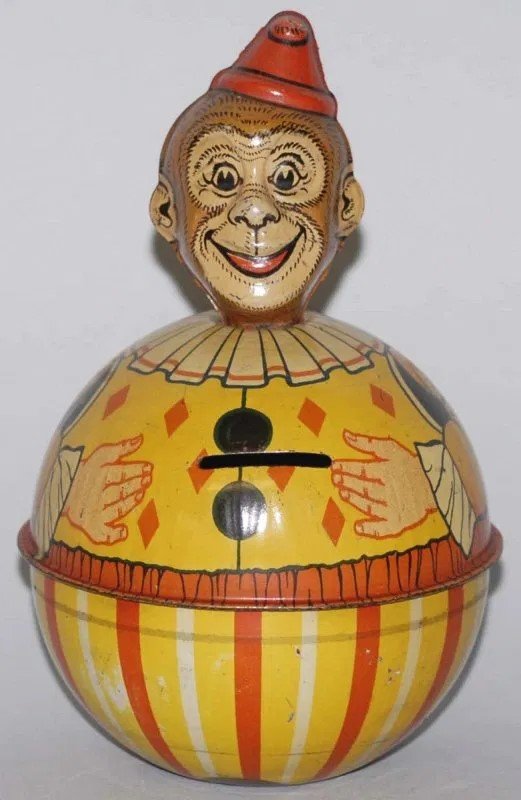
Novelty banks — vehicles, household objects, food, toys and countless other imaginative forms.
Still banks have also been made from a remarkable assortment of materials. Cast iron is especially familiar to collectors, but banks can also be found in pottery and ceramic, tin, spelter and other metals, wood, glass, celluloid, composition and, in later years, plastic. Historical sources document savings banks made from an even wider range of materials.


A Brief History of Still Banks
The idea of putting coins aside for the future is much older than the American still bank. Pottery and china savings banks existed before American manufacturers began producing the cast-iron banks that many collectors recognize today. Some early pottery banks had no practical way to remove the money, which meant the bank sometimes had to be broken when the owner was ready to retrieve the savings.
During the nineteenth century, improvements in American manufacturing made it possible to produce durable cast-iron banks in an enormous variety of shapes. Cast-iron still banks became especially popular during the latter part of the nineteenth century and into the early twentieth century. Houses, animals, people, birds, monuments and other familiar subjects were transformed into small objects designed to encourage children—and sometimes adults—to save their coins. Many cast-iron examples were made in sections held together by a screw or bolt so the money could be removed without destroying the bank.
As manufacturing changed, so did the banks. Tin, ceramic, celluloid, composition and eventually plastic allowed manufacturers to create new designs. Banks also became popular advertising and promotional items. The result is a collecting field that stretches across generations and includes everything from nineteenth-century cast-iron buildings to colorful twentieth-century advertising banks.
Why Do People Collect Them?
For many collectors, a still bank is interesting because it is much more than a container for coins. It can be a small piece of American social history, industrial history, advertising history, folk art or childhood history.
Some collectors concentrate on cast iron. Others collect ceramic banks, buildings, animals, safes, advertising banks or banks made by a particular manufacturer. Some search for rare examples and variations. And many people begin with just one bank—often something inherited from a parent or grandparent—and become curious about the story behind it.
That curiosity is where collecting often begins.
Want to Learn More About Still Banks or the Still Bank Collectors Club?
Whether you have collected still banks for years, recently discovered your first one, or simply have an old bank and are curious about it, the Still Bank Collectors Club of America is a good place to learn more. You do not need to be an expert to become part of the conversation. In fact, many longtime collectors began with a single bank they inherited, found at an antique shop, purchased at an auction or simply liked enough to take home.
A good place to continue exploring is the Still Bank Club Facebook page, where you can see still banks, club news, collecting information and posts from the SBCCA community.
Visit the Still Bank Club on Facebook
If your interest grows, consider becoming a member of the SBCCA. Membership is about much more than receiving The Penny Bank Post or attending the annual convention. It connects you with people who have spent years—sometimes decades—studying, collecting and enjoying still banks. Members willingly share what they have learned about manufacturers, materials, variations, history and the many details that make one bank different from another. Current SBCCA members repeatedly describe that willingness to share knowledge, along with the friendships they have developed through the club, as among the most valuable benefits of membership.
Membership also provides access to an extensive Members-Only section of the SBCCA website. Resources include historic advertisements, patent information, slideshows, videos, articles, information about new discoveries and thousands of images of still banks. Members also have access to the club's archive of The Penny Bank Post and other historical material that can be especially helpful when researching a bank or learning more about a particular manufacturer or type of bank.
The SBCCA has also produced specialized reference books devoted to subjects such as cast-iron building banks, painted German spelter banks, political banks and safe banks. Many of these publications were created from the research and collective knowledge of club members and are not commercially available.
There is another benefit that is harder to describe until you experience it: access to other collectors. A bank that is unfamiliar to you may be immediately recognizable to another member. Someone may know its manufacturer, remember seeing a variation of it, have an old catalog showing it, or be able to point you toward information that would otherwise be difficult to find. Members also connect through regional gatherings and have opportunities to buy, sell and trade banks with people who share their interests.
Perhaps most importantly, the SBCCA helps preserve the history of these objects. Every bank has a connection to the time in which it was made—to childhood, saving, advertising, manufacturing, architecture, popular culture or American and international history. By bringing collectors together and sharing what they know, the Club helps ensure that those stories are not lost.
You do not have to own a large collection to belong. You simply need an interest in still banks and a desire to learn more.
Have a bank you are curious about? Start by exploring this website or following us on Facebook.
Ready to become part of the collecting community?